What goes on a feed tag
A commercial feed tag (also called a feed label) tells the buyer and the inspector what the feed is, what it guarantees and how to use it. The usual parts are:
- Product name, and the brand if there is one
- Purpose statement: the species or class of animal it's for
- Guaranteed analysis: the nutrient minimums and maximums the mill stands behind
- Ingredient statement
- Feeding directions
- Precautionary or warning statements, where the feed needs them
- Net weight
- Manufacturer or distributor name and address
- A lot code, so a bag can be traced back to the batch
Which guarantees are required depends on the species and the type of feed, and on where you sell it. Most states base their rules on the AAFCO model regulations but each enforces its own; Canadian feeds follow CFIA's labelling rules. This page is a description of the software, not legal advice: check the requirements for your feeds with your state feed control office, or with CFIA in Canada.
A feed tag example, part by part
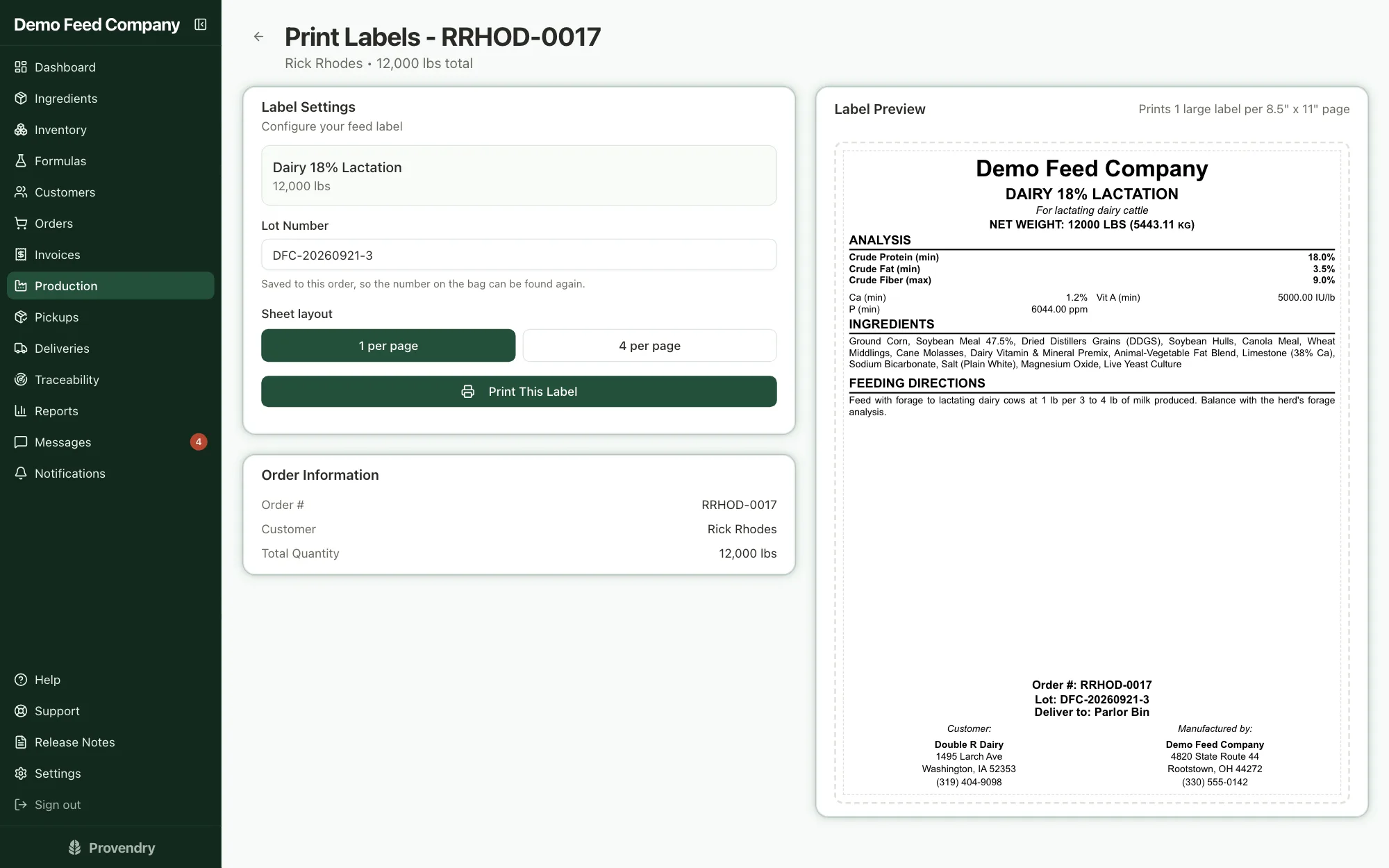
The tag in the picture above was printed from Provendry's sample mill. Reading it from the top: the product name and purpose statement come from the formula; the guaranteed analysis is worked out from the formula's ingredients; the ingredient statement lists what's in it; the feeding directions and precautions are the mill's own wording, saved on the formula; and the lot number, the delivery bin and the net weight come from the order it was printed for. The mill's name and address come from the account.
None of it is typed onto the tag by hand, which is the point. Change the formula and the next tag follows it.
A feed tag with the guaranteed analysis done for you
The guaranteed analysis is the part most often got wrong on a hand-made tag. Provendry starts from the guarantee rows the AAFCO model regulations list for each species, fills in the values from the formula, marks each as a minimum or a maximum, and applies the rule that states small amounts in parts per million and larger ones as a percentage. You can enter a value in whichever unit feels natural; the tag prints the one the rule calls for.
Because the values come from the formula, a change to the formula shows up on the next tag. Nobody has to remember to update a template.
Canadian mills: bilingual CFIA tags in metric
A Canadian account prints CFIA-format tags in kilograms, with the fixed text in English and French. The French of your own feeding directions and cautions is drafted for you when you save the formula, and you check and edit it before it prints; once you've written your own French, it's never overwritten. The tag prints the English, then the French.
Medicated feed tags (US)
For a medicated feed, you paste your drug's approved label text and the tag prints it word for word, with the required Veterinary Feed Directive caution. Provendry doesn't write label claims or withdrawal statements; that's regulatory wording about a specific product, and it has to come from the approved label. VFDs themselves are kept on file and checked before a medicated load is made; see medicated feed and VFDs.
Printing tags for bags and totes
Tags print right from the production card, so the person running the batch prints them with the lot code and the bin already on. Choose one tag per page for a tote, or four per page for a stack of bags.
Why tags from the formula beat a feed tag template
Most mills start with a feed tag template in Word: copy last month's tag, change the numbers, print. It works until the formula changes and the template doesn't, and then the tag on the bag says something the feed isn't. That's the tag an inspector finds.
Building the tag from the formula removes the copy step. The formula is the single record; the tag, the work order and the invoice all read from it. You still review every tag before it prints: the system does the assembling, you do the approving.
Comparing options? See our honest comparison of feed formulation software, feed tags included.
Questions mills ask
- What is a feed tag?
- It's the label attached to a bag or tote of commercial feed, or sent with a bulk load, that says what the feed is, what it guarantees, what's in it and how to feed it. Provendry builds it from the formula and the order and prints it from the production card.
- Is a feed tag the same as a feed label?
- Yes. The regulations say label; most mills say tag. In Provendry it's the same printout, sized one per page for a tote or four per page for bags.
- What does a guaranteed analysis have to include?
- It depends on the species and the type of feed, and on where it's sold; most states follow the AAFCO model regulations, and Canada has CFIA's rules. Provendry starts from the rows each species needs and fills the values from the formula, but check your own feeds' requirements with your state feed control office or with CFIA.
- Will the tags pass a feed control inspection?
- Provendry builds the tag from the formula itself, with the guarantee rows each species needs, the ingredient statement, your directions and precautions, net weight and your manufacturer details. You review every tag before it prints: the system does the assembling, you do the approving.
- Do you print bilingual CFIA feed tags?
- Yes. Canadian accounts print CFIA-format tags in metric with English and French text. The French of your directions and cautions is drafted for you to check and edit, and your own wording is never overwritten.
- Can it print medicated feed tags?
- Yes, for US mills. Paste your drug's approved label text and the tag prints it word for word with the required VFD caution. Provendry doesn't write label claims or withdrawal statements. Canadian medicated feed isn't covered.